Your Go-To Guide for Residential Skylight Repair in Medford and Beyond
Your Skylight: A Source of Light and a Call for Care
Residential skylight repair in medford or is essential when your source of natural light begins to leak, fog up, or let in unwanted drafts. Homeowners in Medford and the surrounding Rogue Valley often face skylight issues due to the region’s unique weather patterns—wet winters, hot summers, and occasional debris from surrounding trees. Whether you’re dealing with a minor seal failure or visible water damage, understanding the repair process helps you protect your investment and maintain the comfort and brightness of your home.
Quick Answer: Finding Residential Skylight Repair Services in Medford, OR
- Common Issues: Leaks, condensation, drafts, cracked glass, and failed seals
- Typical Repair Process: Professional inspection, damage assessment, sealing/flashing repair, parts replacement, and water testing
- When to Call a Pro: Any leak, cracked glass, seal failure, or structural damage
- What to Look For: Licensed, insured contractors with local experience and positive reviews
- Maintenance Tips: Regular cleaning, seal inspection, and debris removal
For comprehensive roofing solutions beyond skylights, explore our full range of roofing services. When you’re ready to address your skylight concerns, contact Pressure Point Roofing for a professional assessment.
Skylights transform dark spaces into bright, welcoming rooms. Science backs this up—natural light improves mood, regulates sleep cycles, and can even reduce energy consumption by cutting down on daytime lighting needs. In Medford homes, where winter months can feel especially gray, a well-functioning skylight makes a meaningful difference in how your home feels and functions. Beyond comfort, skylights add value to your property, making spaces feel larger and more appealing to future buyers.
But skylights are also one of the most vulnerable parts of your roof. They endure the same weather as the rest of your roofing system while introducing a complex seal where different materials meet. Over time, exposure to Southern Oregon’s climate—intense summer sun, winter rain, and temperature swings—takes its toll. Seals deteriorate, flashing loosens, and even the glass or acrylic can develop cracks. When problems arise, timely repair is not just about stopping a leak; it’s about protecting your home’s structure, preserving indoor air quality, and maintaining the benefits that drew you to skylights in the first place.
This guide walks you through everything you need to know about residential skylight repair in medford or—from identifying early warning signs to understanding the repair process, knowing when to call a professional, and choosing the right contractor for the job. Whether your skylight is showing minor condensation or you’ve noticed water stains spreading across your ceiling, you’ll find practical, straightforward information to help you take the next step with confidence.
I’m Larry Sykes, Director of Sales and Marketing at Pressure Point Roofing, with over 38 years in the roofing and home improvement industry serving the Rogue Valley. Throughout my career, I’ve worked alongside skilled teams addressing all types of roofing challenges, including residential skylight repair in medford or, helping homeowners protect their investments and maintain the comfort of their homes.

Identifying Skylight Problems: Common Signs and Causes in Medford
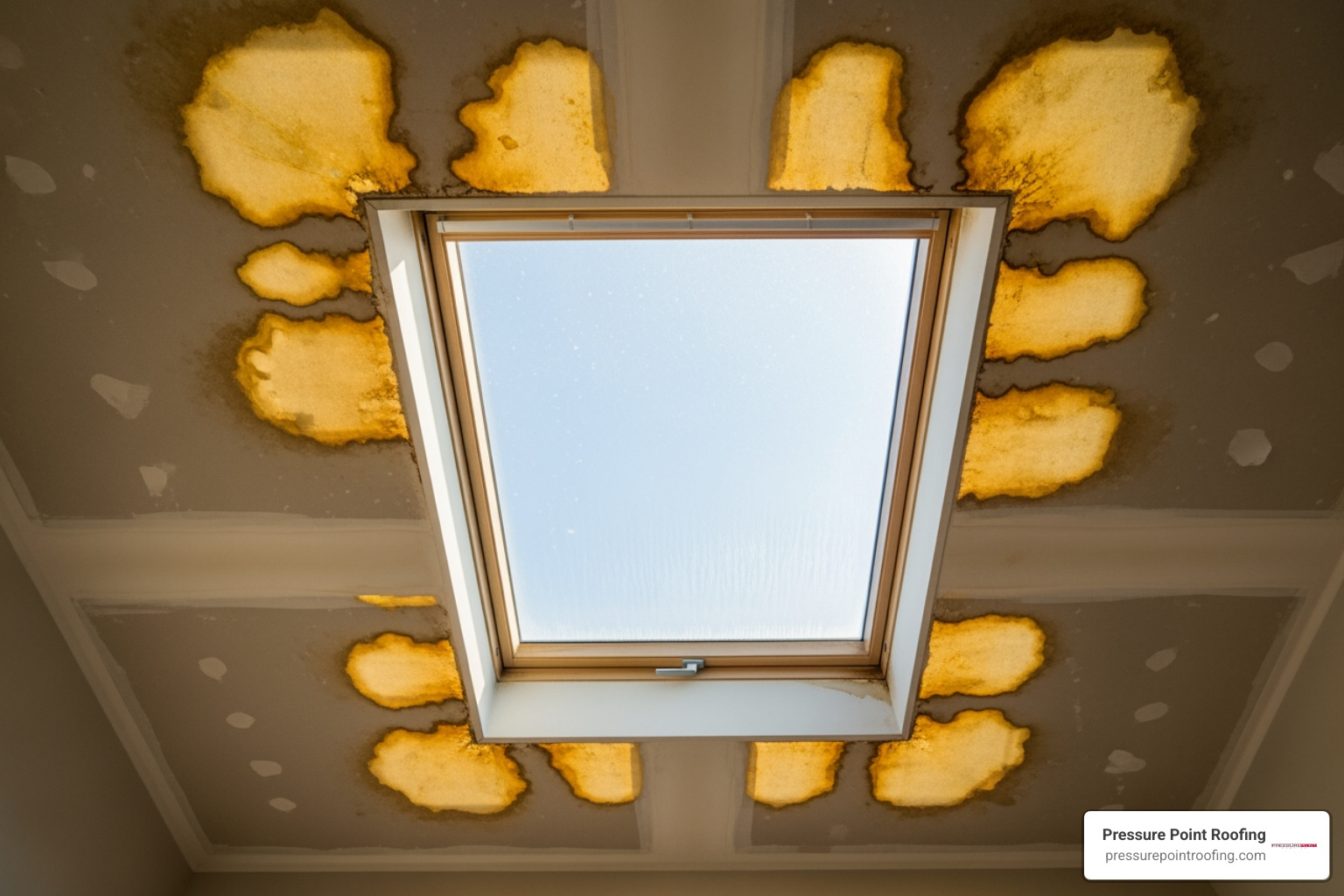
Skylights are wonderful until they’re not. One day you’re enjoying natural light streaming into your home, and the next you’re staring at a suspicious brown stain spreading across your ceiling. The good news? Most skylight problems give you fair warning before they become disasters. Learning to recognize these early signs means you can address issues while they’re still manageable.
In Medford and throughout the Rogue Valley, residential skylight repair in medford or needs often stem from our specific climate challenges. Our warm, dry summers bake roofing materials for months, while our wet winters test every seal and joint. Add in occasional high winds, falling branches from nearby trees, and temperature swings that make materials expand and contract, and you’ve got the perfect recipe for skylight stress.
Telltale Signs Your Skylight Needs Attention
Your skylight will tell you when something’s wrong—you just need to know what to look for. Visible water drips are the most obvious alarm bell. If you see water actively dripping from or around your skylight, that’s your cue to take immediate action. Water doesn’t just damage ceilings; it seeps into walls, ruins insulation, and can create conditions for mold growth.
But leaks don’t always announce themselves so dramatically. Sometimes they whisper instead of shout. Discolored drywall or peeling paint around your skylight tells you water has been sneaking in for a while. Those brown or yellow stains might seem minor, but they represent moisture that’s already compromising your home’s structure.
Foggy panes between the glass layers mean the seal on your insulated glass unit has failed. You can’t wipe this condensation away because it’s trapped inside. Beyond looking unsightly, this seal failure destroys your skylight’s energy efficiency and signals that moisture is accumulating where it shouldn’t be.
Feeling a noticeable draft near your skylight even when it’s closed? That cold breeze means the seals around the glass or frame have given up. You’re literally heating or cooling the outdoors, which shows up on your energy bills month after month.
Cracks or chips in the glass or acrylic might start small, but they rarely stay that way. A tiny chip from a falling branch can spiderweb into a major crack with the next temperature swing. Even modern impact-resistant glass has its limits when Southern Oregon weather decides to test them.
Don’t ignore condensation forming on the interior surface of your skylight either. While a little moisture on a cold morning might be normal, persistent condensation suggests ventilation problems or seal issues that need attention before they escalate.
For a deeper understanding of skylight maintenance and common issues, check out our guide on What You Need to Know About Skylights.
Why Skylights Fail: Understanding the Root Causes
Understanding what causes skylight problems helps you prevent them—or at least catch them early. In our region, the Southern Oregon climate deserves top billing as a troublemaker. Those intense summer days don’t just make your air conditioner work overtime; they bake the sealants and flashing materials around your skylight, making them brittle and prone to cracking. Then winter arrives with its persistent rain, probing every weakened seal for a way inside. This cycle of expansion in heat and contraction in cold stresses every joint and connection, year after year.
Flashing and seals are your skylight’s unsung heroes—until they fail. The flashing system channels water away from the skylight opening, but only when it’s properly installed and maintained. If the flashing was never integrated correctly with your roofing materials, or if it’s deteriorated over time, water finds its way through. The seals around the glass and frame face similar challenges. When they dry out, crack, or separate, they create pathways for both moisture and air, leading to leaks, foggy glass, and those uncomfortable drafts.
Physical damage from falling branches, hail, or debris can crack or shatter skylight glass. While modern skylights use durable materials designed to withstand impacts, Mother Nature occasionally wins. A heavy branch from a nearby oak or pine can overwhelm even the toughest glass.
Age-related deterioration is inevitable. Most well-maintained skylights last eight to fifteen years before materials start showing their age. Seals dry out and lose flexibility. Plastic components become brittle. Metal flashing can corrode, especially in our wet climate. There’s no shame in a skylight reaching the end of its functional life—it’s simply time for attention.
Finally, improper installation causes more problems than you might expect. A skylight that doesn’t sit flush with the roof, flashing that isn’t properly integrated, or inadequate sealants can create issues from day one. Sometimes homeowners find their “new” skylight has been leaking since installation simply because the work wasn’t done right the first time. This is one reason professional installation matters so much—the stakes are high when you’re cutting a hole in your roof.
The Skylight Repair Process: From Diagnosis to Sealing
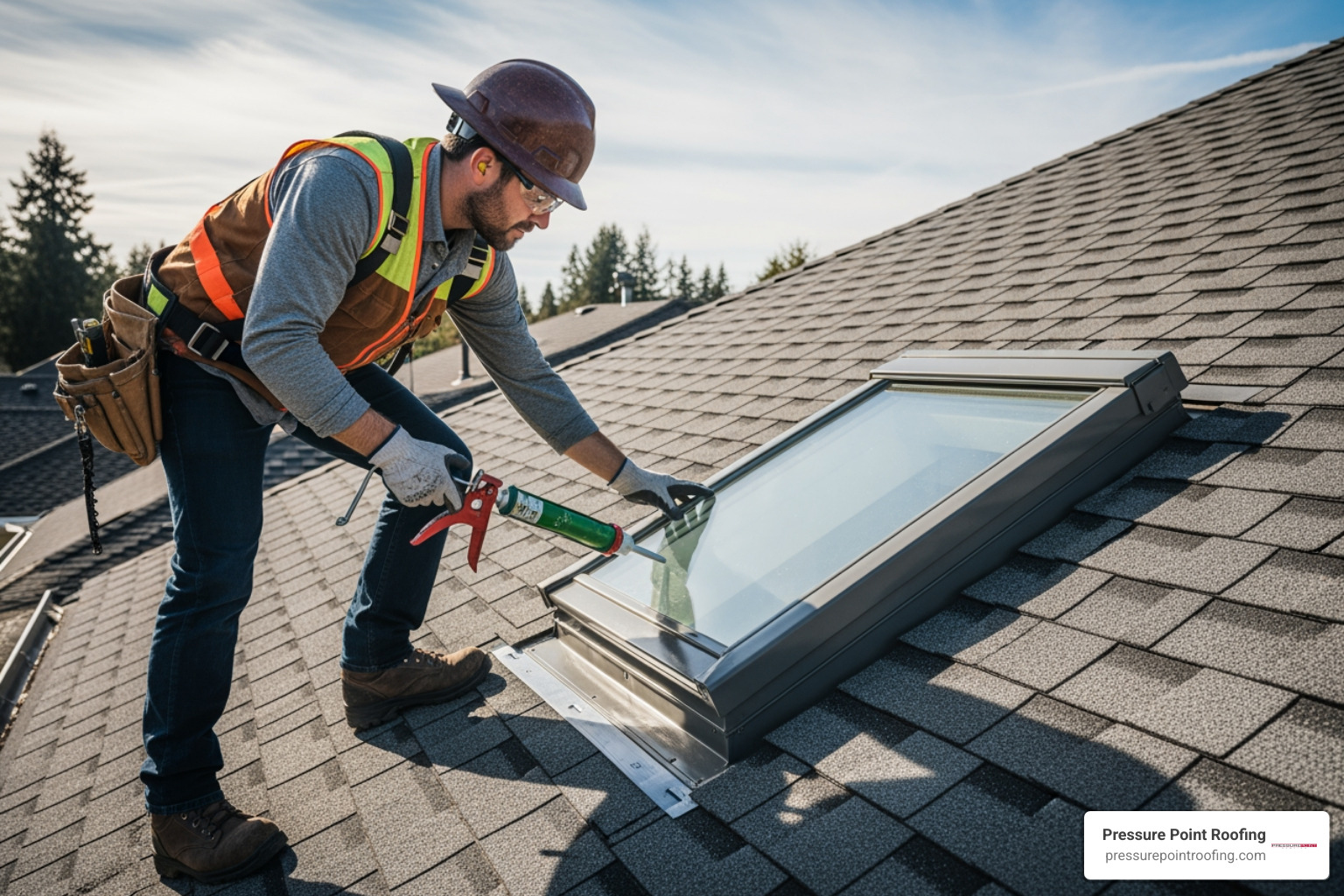
When you spot water stains spreading across your ceiling or feel a draft near your skylight, it’s natural to worry. But here’s the good news: residential skylight repair in medford or follows a straightforward, methodical process that addresses the problem at its root. At Pressure Point Roofing, we’ve refined our approach over decades of working on homes throughout the Rogue Valley, and we’re here to walk you through exactly what happens when you call us for help.
The truth is, skylight repairs require precision and safety measures that make them challenging for homeowners to tackle alone. Working on a roof always carries risks, and skylights add complexity with their multiple seals, flashing systems, and integration points with your roofing materials. Before you consider climbing up there yourself, we strongly recommend reading Why You Should Hire Pros to Install Skylights Rather Than DIY—it might just save you from a costly mistake or dangerous situation.
Step-by-Step: What to Expect During a Professional Repair
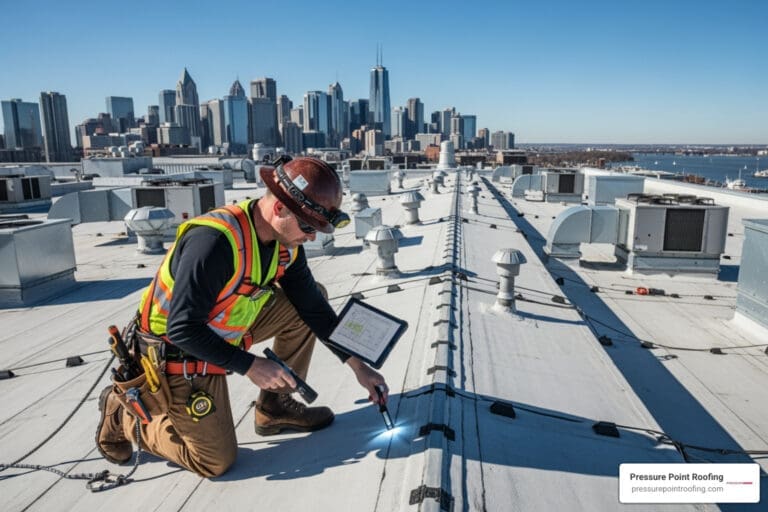
When you schedule a skylight repair with our team, we start with a comprehensive initial assessment. This isn’t just about finding the leak—it’s about understanding the whole story. Water has a sneaky way of traveling along roof decks and framing before showing up at your ceiling, so we inspect the entire skylight unit, the surrounding roofing materials, and all the flashing. Sometimes we’ll check from both inside and outside your home to trace the water’s true path. This detective work ensures we’re fixing the actual problem, not just treating a symptom.
Safety comes first, always. Before any work begins, our trained technicians set up proper safety equipment and secure the work area. Roofs can be slippery, especially when damaged or wet, and we follow strict protocols to protect both our team and your property. You can relax knowing experienced professionals are handling this part.
Once we’ve pinpointed the issue, we carefully remove any damaged components. If your glass unit is fogged or cracked, we’ll take out the old glass. If flashing has failed, we’ll remove those compromised materials. We work efficiently here—glass is typically removed for just a few minutes to minimize any heat or air conditioning loss from your home. Every step is deliberate and methodical.
Before anything new goes in, we thoroughly clean and prepare the frame. This means scraping away old, degraded sealants, clearing out dirt and debris, and creating a smooth, clean surface. Think of it like preparing a canvas before painting—the better the preparation, the better the final result. This step might not look glamorous, but it’s absolutely critical for a lasting repair.
Now comes the heart of the repair: applying new sealants and flashing. We use high-quality materials specifically chosen to withstand Southern Oregon’s unique climate—those hot, dry summers and cool, wet winters we know so well. If flashing was your problem, we install new flashing that integrates properly with your existing roof, creating a watertight seal where the skylight meets the roofing materials. We follow rigorous procedures, often developed by leading manufacturers, because we know these details matter years down the road.
When we install new parts—whether it’s an insulated glass unit, updated flashing kit, or replacement mechanical components for a ventilating skylight—we follow manufacturer specifications and industry best practices to the letter. Each glass unit we install typically comes with a 10-year warranty against seal failure, giving you genuine peace of mind about your investment.
After everything is in place, we often perform a water test to confirm the repair’s integrity. We carefully apply water to the repaired area and check inside your home for any signs of leakage. It’s our way of making sure the problem is truly solved before we pack up. And speaking of packing up, we always leave your property as tidy as we found it, removing all debris, old materials, and tools. Your home should look like we were never there—except, of course, for your newly repaired, leak-free skylight.
Repair vs. Replacement: Making the Right Choice for Your Home
One of the most common questions we hear is simple but important: should I repair my skylight or replace it entirely? The answer isn’t always obvious, and we’re here to help you think through the decision based on your specific situation.
Repairing your skylight makes excellent sense when you’re dealing with isolated issues. A minor leak from compromised flashing, a failed glass seal causing foggy panes, or a broken mechanical part in a ventilating unit—these are all problems we can fix effectively and affordably. In fact, we can often save homeowners up to 75% compared to a full replacement. Most repairs take less than an hour per skylight, making them quick and minimally disruptive to your daily routine. When you catch problems early and address them properly, repairs can extend your skylight’s lifespan by several years, allowing you to continue enjoying all that natural light.
But sometimes replacement is the wiser path forward. If your skylight frame is significantly warped, rotted, or cracked, or if multiple components are failing at once, you’re likely looking at a unit that’s reached the end of its useful life. Skylights typically last eight to 15 years when properly maintained, so if yours is approaching or past that range, even a successful repair might just be buying you a year or two before the next problem appears.
Energy efficiency is another factor worth considering. Older skylights lack the advanced glazing, low-E coatings, and superior sealing technology that newer models offer. If you’re feeling temperature swings in the room below your skylight, or if your energy bills seem higher than they should be, upgrading to a modern unit can make a noticeable difference in your home’s comfort and efficiency. Modern skylights do a much better job of regulating room temperature and keeping the elements where they belong—outside.
Sometimes a leak has been present long enough to cause damage beyond the skylight itself—to the roof deck, rafters, or interior drywall. In these cases, replacement allows us to address all the compromised materials comprehensively, ensuring your home’s structure is sound. And of course, if you’re simply ready for an upgrade—maybe you’d love remote-controlled venting, integrated blinds, or solar-powered operation—replacement opens up those possibilities.
Here’s a practical comparison to help you think through your options:
| Scenario | Repair (Often Recommended) | Replacement (Often Recommended) |
|---|---|---|
| Minor leak from flashing | ✓ Cost-effective, quick fix | — |
| Foggy glass (seal failure) | ✓ Replace glass unit only | — |
| Small crack in glass | ✓ Glass replacement | — |
| Broken mechanical parts (vented unit) | ✓ Replace specific components | — |
| Cracked or warped frame | — | ✓ Structural integrity compromised |
| Skylight over 15 years old with multiple issues | — | ✓ More economical long-term |
| Significant water damage to surrounding structure | — | ✓ Allows comprehensive repair |
| Poor energy efficiency/outdated technology | — | ✓ Modern units offer better performance |
We understand this decision affects both your immediate budget and your long-term comfort. That’s why we always provide honest assessments—if a repair will serve you well, we’ll tell you. If replacement makes more sense, we’ll explain why. Our neighbors in Ashland face similar decisions, and we’ve helped many of them through this process, as detailed in our article about Affordable Skylight Repair in Ashland OR.
The goal isn’t just to fix today’s problem—it’s to help you make the choice that protects your home and serves you best for years to come.
Schedule a Consultation
By submitting this form, I agree to receive calls and text messages (including those sent using automated technology) from Pressure Point Roofing, LLC and its representatives at the number provided. Message and data rates may apply. Message frequency may vary. Consent is not required as a condition of purchase. Reply STOP to unsubscribe at any time.
Related Content
Client Reviews

Partners and Awards