Flat Roof Replacement

Tackling Urgent Flat Roof Challenges Today
Facing a leaking or damaged flat roof? Get timely, expert roof replacement solutions tailored to Southern Oregon’s unique weather conditions. Call Pressure Point Roofing today to schedule a comprehensive roof assessment or to discuss our financing options.
Whether your property is located in the bustling center of Medford, the hills of Ashland, or further out in Klamath Falls and Grants Pass, water intrusion on a low-slope roof requires immediate attention. A failing flat roof compromises structural integrity, insulation value, and interior safety. We provide the expertise needed to secure your building envelope against the elements.
- Complete the job quickly, ideal before rain sets in.
- Materials and labor guaranteed: safety and durability assured.
- Flexible financing options: straightforward and customizable.
All projects meet local building codes with extensive warranties and flexible payment plans.
Comprehensive Flat Roof Replacement Solutions
Replacing a flat roof is a significant capital improvement that restores the watertight integrity of your building. Unlike steep-slope roofing, low-slope systems rely on watertight membranes and impeccable drainage planning to prevent standing water. Residents and business owners in Central Point, Eagle Point, and White City need systems that can withstand the intense summer heat and the persistent saturation of the Pacific Northwest winter.
A complete replacement involves more than just rolling out new material. It requires a systematic approach to tearing off old layers, inspecting the decking for dry rot, and installing high-performance materials designed for longevity. The goal is to create a monolithic barrier that resists UV degradation, punctures, and pooling water.
TPO and PVC Single-Ply Membranes
Thermoplastic Polyolefin (TPO) and Polyvinyl Chloride (PVC) are among the most effective solutions for the Southern Oregon climate. These single-ply membranes offer reflective white surfaces that reduce heat absorption during the scorching months in Gold Hill and Rogue River, lowering cooling costs. They are heat-welded at the seams, creating a continuous, waterproof sheet that is highly resistant to chemical exposure and organic growth.
Modified Bitumen Systems
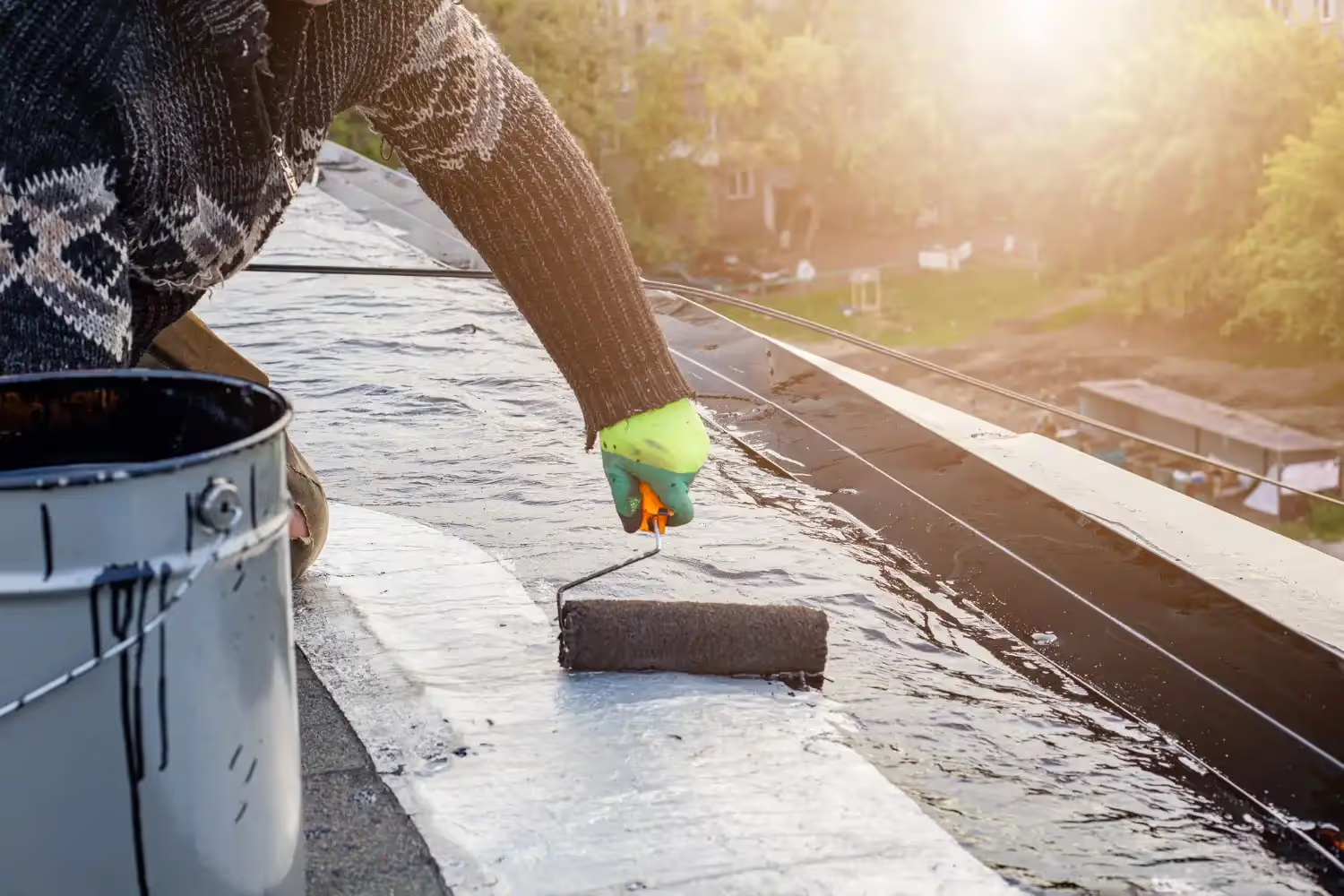
For structures requiring a more rugged surface, modified bitumen provides multiple layers of protection. This evolution of the traditional built-up roof uses asphalt reinforced with modifiers for elasticity. It is an excellent choice for buildings in areas like Cave Junction or Butte Falls where the roof might see foot traffic or higher potential for impact damage.
EPDM Rubber Roofing
Ethylene Propylene Diene Monomer (EPDM) is a durable synthetic rubber roofing membrane. Known for its longevity and ability to withstand extreme temperature fluctuations, it remains flexible even during the freezing nights common in Williams or Applegate.
The Installation and Replacement Process
A successful flat roof replacement relies heavily on the quality of the installation. Pressure Point Roofing utilizes a strict protocol to ensure every layer of the roof system contributes to a watertight guarantee. From the initial tear-off to the final flashing detail, every step is executed with precision. View our project gallery to see examples.
- Site Preparation and Safety Setup: The process begins with securing the perimeter and protecting the landscaping and surrounding property. In active service areas like Phoenix and Talent, minimizing disruption to daily operations or home life is a priority. Dumpsters are positioned strategically, and safety tarps are deployed.
- Tear-Off and Deck Inspection: Technicians remove the existing roofing material down to the structural deck. This step is critical because it exposes any underlying issues such as rotted plywood, rusted metal decking, or saturated insulation. In older buildings in Jacksonville or Shady Cove, undetected deck rot can lead to catastrophic failure if not addressed before the new roof is installed.
- Insulation and Cover Board Installation: Flat roofs require rigid insulation, typically Polyiso (ISO) boards, to meet energy codes and provide thermal resistance. A tapered insulation system is often installed at this stage. This involves cutting insulation boards at slight angles to create a slope toward drains and scuppers, actively eliminating the risk of ponding water. A cover board is then added to provide a solid substrate for the membrane.
- Membrane Application: The chosen membrane (TPO, PVC, etc.) is rolled out and mechanically attached or fully adhered to the substrate. For thermoplastic systems, a robotic heat welder fuses the seams together at temperatures exceeding 1,000 degrees Fahrenheit. This molecular bond is stronger than the sheet itself, ensuring water cannot penetrate the seams.
- Flashing and Detail Work: The most vulnerable points on a flat roof are where the membrane meets vertical surfaces, such as walls, HVAC curbs, vents, and pipes. Custom-fabricated flashings are installed around these penetrations. Terminators and counter-flashings are secured to masonry or siding to prevent water from driving behind the membrane.
- Final Inspection and Cleanup: Once installation is complete, a thorough inspection of every seam and flashing detail is conducted. The work area is magnetically swept for nails and cleared of all debris, leaving the property clean and the roof ready for service.
Determining When to Replace vs. Repair
Deciding between a repair and a full replacement is a financial and logistical challenge for property owners. While a patch might stop a leak temporarily, it is often a short-term fix for a systemic problem. Understanding the condition of the entire roof system helps in making an educated decision that maximizes ROI.
Indicators for Replacement
- Saturation of Insulation: If moisture has penetrated the membrane and soaked the insulation beneath, the roof must be replaced. Wet insulation loses its R-value, breeds mold, and causes the decking to rot. Walking on the roof may feel "spongy" in these areas.
- Widespread Membrane Failure: When a roof reaches the end of its service life, the membrane becomes brittle. In TPO or PVC, this manifests as cracking or "alligatoring." In EPDM, the rubber may shrink, pulling away from parapet walls. If these signs are visible across the entire surface, spot repairs will chase leaks indefinitely.
- Frequent and Recurring Leaks: If you are calling for repairs multiple times a year, the cost of cumulative repairs will quickly exceed the monthly financing cost of a new roof. A replacement stops the cycle of emergency spending.
- Age of the System: Most flat roof systems have a lifespan of 20 to 25 years. If your roof in Merlin or Klamath Falls is approaching this age, proactive replacement prevents emergency failure during a storm.
When Repair is Viable
- Isolated Damage: If the roof is relatively new and damage is limited to a specific puncture from storm debris or a dropped tool, a patch is sufficient.
- Flashing Issues Only: Sometimes the field of the roof is sound, but the sealant around a vent pipe has dried out. Resealing or replacing the flashing boot can extend the roof's life without a full tear-off. Ask about our maintenance program for routine care.
Navigating Local Climate and Regulations
The geography of Southern Oregon presents specific challenges that dictate how flat roofs must be installed. The region experiences a distinct wet season from late October through March, followed by hot, dry summers. This seasonality creates a "build window" where replacement is most efficient.
Weather Windows and Project Timing
The ideal time for flat roof replacement is from late spring through early autumn. During these months, the risk of moisture getting trapped in the system during installation is minimized. Adhesives and heat welding equipment also perform more consistently in moderate temperatures. While emergency replacements can occur in winter, they require extensive tarping and weather monitoring, often increasing labor time.
Permitting and Code Compliance
Every municipality, from the city center of Medford to the rural outskirts of Butte Falls, adheres to the Oregon Structural Specialty Code. This code dictates specific R-values for insulation (energy efficiency) and wind uplift ratings.
- Wind Uplift: In open areas or higher elevations, wind speeds can be significant. The roofing system must be fastened with the correct density of screws and plates to prevent the membrane from acting like a sail and detaching from the deck.
- Drainage Codes: Plumbing codes require adequate drainage to prevent structural overload. If a flat roof lacks sufficient slope, tapered insulation or additional drains must be added during replacement to meet current standards.
- Historical Zones: For properties in historic districts like Jacksonville, roofing materials may need to meet specific aesthetic guidelines even if they are low-slope, ensuring they are not visible from the street or match the era of the building.
Quality Assurance and Long-Term Value
Investing in a high-quality flat roof replacement secures the asset against water damage for decades. The focus must be on the details that ensure performance. This includes using manufacturer-certified components, ensuring proper weld temperature, and verifying that water flows freely to drains.
Warranties play a massive role in the value proposition of a new roof. A standard material warranty covers defects in the membrane, but a system warranty or workmanship warranty covers the installation itself. This protection is vital, as the majority of roof failures are due to installation errors rather than material defects. By adhering to manufacturer specifications, the new roof qualifies for these extended protections.
Furthermore, energy efficiency is a tangible benefit of modern flat roofing. White reflective membranes can lower roof surface temperatures by up to 50 degrees compared to dark asphalt roofs. For commercial buildings with HVAC units on the roof, this reduces the intake air temperature, allowing air conditioning systems to work less specifically during the hot afternoons in Grants Pass and White City.
Choosing the right partner for this project ensures that the specific constraints of the building, whether it’s a warehouse, a multi-family complex, or a modern residential home, are met with precision. From the initial load calculation to the final cleanup, professional execution eliminates the risks associated with flat roofing.
Secure Your Property Against the Elements
A compromised flat roof is a liability that grows with every rainstorm. Delaying replacement can lead to internal damage, mold remediation costs, and structural repairs that far exceed the price of a new roof. Whether you are managing a commercial facility in Medford or a residential property in Applegate, the goal is a watertight, energy-efficient system that provides peace of mind.
We provide the technical expertise and local knowledge necessary to install flat roofing systems that withstand the Southern Oregon climate. Secure your investment with a durable solution designed for longevity.
Take the next step in protecting your building. Contact Pressure Point Roofing today to request your professional flat roof replacement estimate.
Contact Us